
2 min read
Every Fresh department has a holiday ritual. Sometime in early November, someone pulls up last year's Thanksgiving numbers, adds a little for growth, trims a little for whatever went wrong, and books the order.
It's a reasonable habit. History is real data, and the people doing this usually know their stores well. But history only tells you what sold last year. It doesn't tell you what will sell this year, and this year looks different in at least four ways.
1. The calendar moved
Thanksgiving falls on Nov 26 this year, a day earlier than last year. That shifts every pre-holiday shopping day. The Saturday stock-up, the Monday rush, and the Tuesday and Wednesday peaks all land on different dates than last year's report shows.
A plan copied line for line is already a day off.
2. Prices are moving, and not all in the same direction
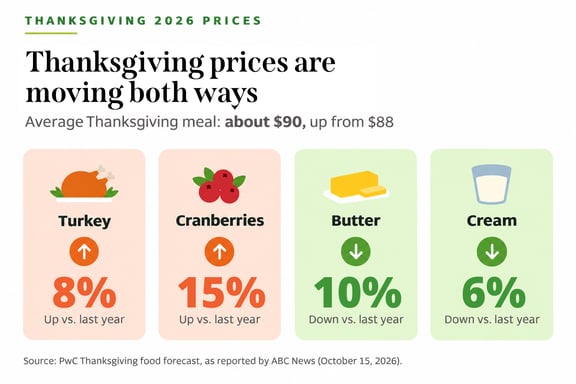
PwC expects the average Thanksgiving meal to cost about $90 this year, up from $88, according to a forecast reported by ABC News. Inside that number, the movement goes both ways:
Going up: turkey nearly 8%, cranberries nearly 15%
Coming down: butter 10%, cream 6%
When prices move, baskets move. Shoppers trade down on turkey size, trade across items, and stock up where prices fell. Your dairy case may move faster than last year while your turkey count needs a closer look.
3. Shoppers changed how they shop
Circana data shared in Supermarket News shows shoppers making 6% more trips for food and beverages while spending per trip stays flat.
More trips, smaller baskets. That changes when demand shows up during holiday week, not just how much.
Add the end of daylight saving time, which pulls the evening rush earlier, and the daily shape of demand looks different than it did a year ago.
4. One ad, five departments
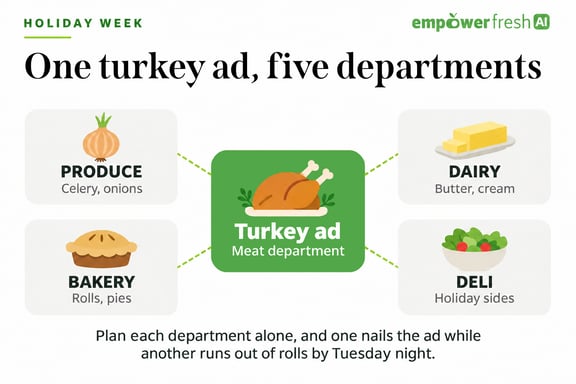
A turkey ad doesn't stay in the meat case. It pulls:
Produce: celery and onions
Dairy: butter and cream
Bakery: rolls and pies
Deli: sides
When each department plans on its own, one nails the ad while another runs out of dinner rolls by Tuesday night.
History plus live demand
None of this means last year's numbers are useless. They're the best starting point you have. The shift is in what happens next: instead of adjusting history by gut feel, you combine it with what's actually happening now: current demand, current prices, the real calendar, and what every other department is planning.
That's how EmpowerFresh AI approaches holiday booking. It uses years of sales history together with live demand signals for each store and each department, so whether your team pre-books every key item or just a few, the order is built for this year's shoppers.
Before you book this year's order, ask one question: is this plan built on what's happening now, or on what happened last November?
See how EmpowerFresh AI builds a holiday plan for your stores.
Sources: Sources: PwC Thanksgiving food forecast, as reported by ABC News / Good Morning America (October 15, 2026); Circana data, as reported by Supermarket News (October 14, 2026).