
2 min read
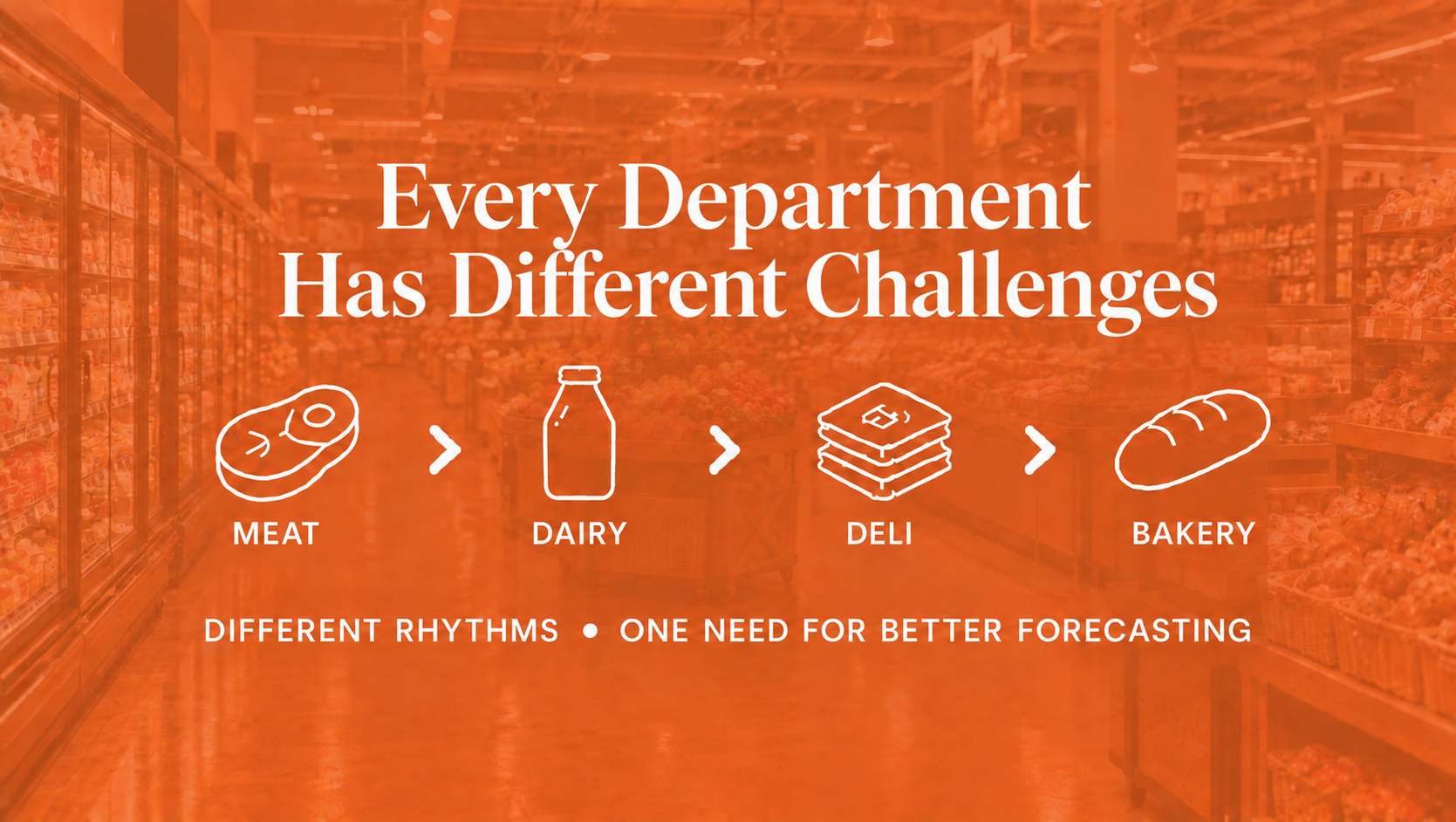
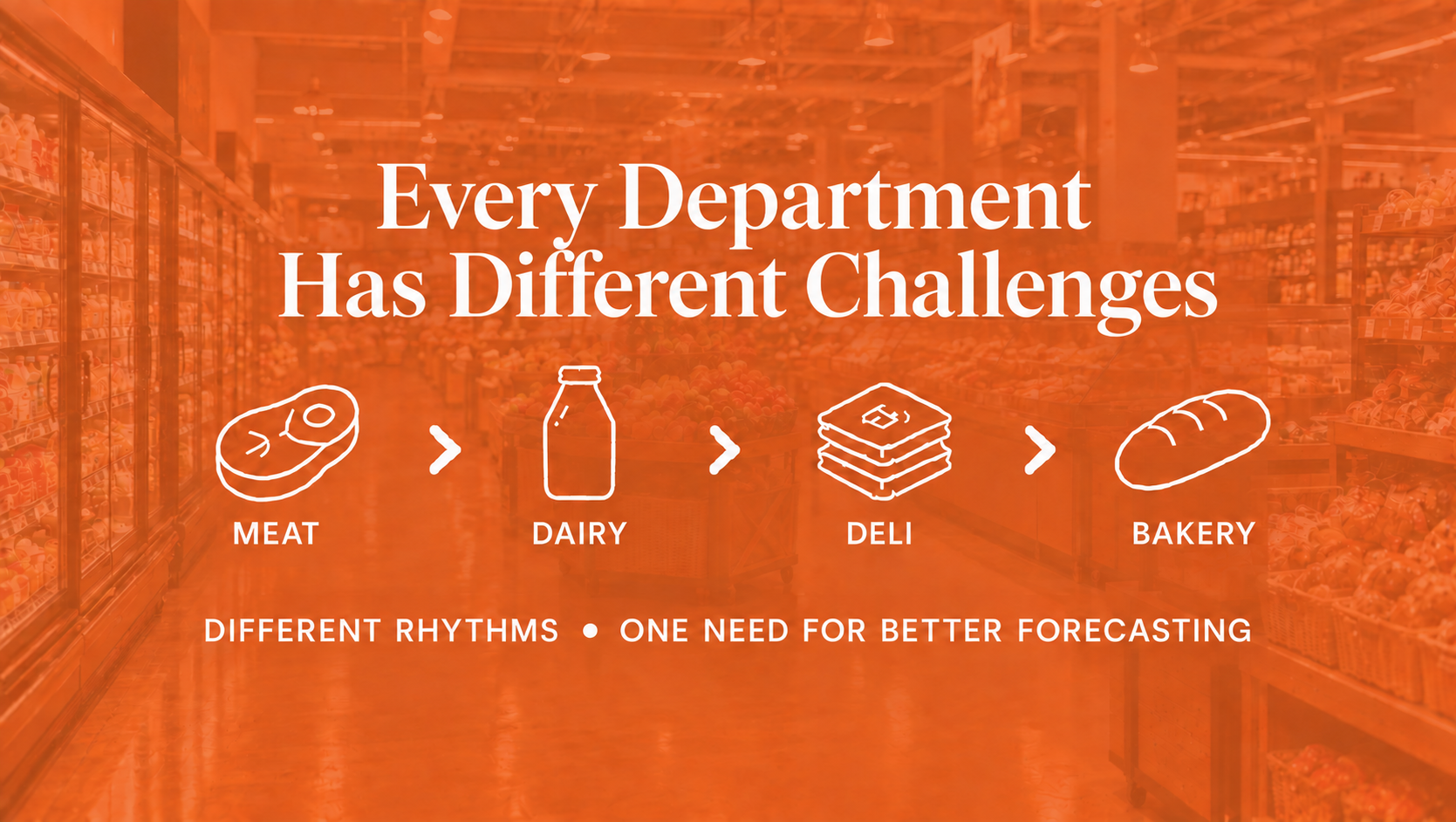
Walk the perimeter of any grocery store and you're really walking through four different businesses. Meat runs on production schedules. Dairy runs on velocity. Deli changes by the hour. Bakery runs two forecasts at once. Different rhythms, different risks, but every department depends on the same two things: accurate forecasting and timely decisions. Get either wrong, and the cost shows up somewhere, whether that's shrink, empty cases, or missed sales.
Meat: precision or pay for it
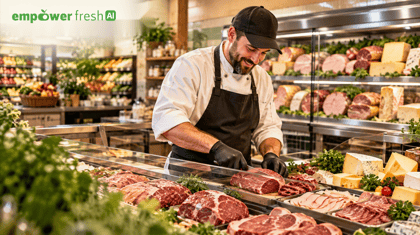
A Meat department lives and dies by its production plan. Cutters need to know exactly what to prepare, built from expected demand, not last week's guess. Overproduction leads to shrink, which means wasted labor, packaging, and product all at once. Underproduction is just as costly: it shows up as empty cases right when a customer was ready to buy, and that's a sale you don't get back. Cutting schedules are built around that plan too, so when the forecast is off, it's not just product that's misallocated, it's labor.
Dairy: velocity meets complexity
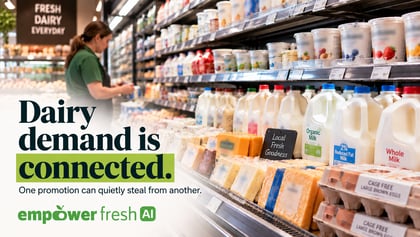
Dairy looks like the easy department from the outside. Milk and eggs move fast, and the category seems almost self-managing. In practice, that velocity hides real complexity. Teams have to forecast high-turn staples while accounting for product cannibalization across brands, sizes, and flavors, where a promotion on one SKU can quietly pull sales away from another rather than growing the category at all. A promotion on a half-gallon doesn't just compete with other private-label items, it can pull share from the national brand right next to it.
Deli: demand that changes by the hour
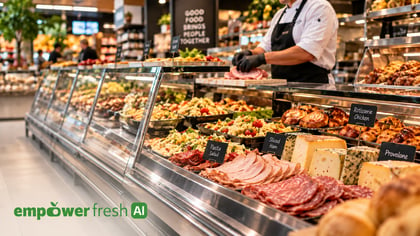
Deli operators don't get the luxury of planning once a day and moving on. Between prepared foods, hot cases, and sliced meats and cheeses, demand shifts hour to hour: a lunch rush, a dinner rush, a weekend spike that looks nothing like a weekday. The forecast has to keep pace with that rhythm in something close to real time, or the case is either picked clean or half full at the wrong moment. Prepared foods and hot case items also have a short shelf window, so a forecast that's even a little late doesn't just cost a sale, it turns into waste.
Bakery: two forecasts in one
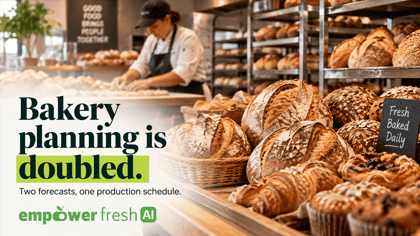
Bakery adds a layer of complexity the other departments don't face. It's not just about forecasting finished goods, it's about making sure the right ingredients are on hand to support the production schedule behind them. A holiday spike in demand for a specific cake or bread doesn't just mean baking more; it means flour, packaging, and specialty ingredients need to be ordered well ahead of time. Miss on either side, and the whole production schedule falls apart.
The common thread
Different departments, different rhythms, different failure points, but the same underlying need: forecasting that's accurate enough, and fast enough, to keep every case full without the shrink.
Every department's forecast depends on the same thing: knowing what's coming before it happens.
👉 See how EmpowerFresh's AI-Assisted Ordering turns that into a single, reliable plan across your whole store.